Creative Mode Building Fundamentals
Creative mode removes resource constraints, letting you focus entirely on design. Start with a flat world or superflat preset for unobstructed building. Use the hotbar's middle-click to copy any block. Mastering the creative inventory quick-search (keybind: B) saves hours of menu navigation. Build on a chunk-aligned grid for redstone compatibility and world-save optimization. Always establish a reference point — build your first structure at world spawn so coordinates stay manageable.
Layer your builds from foundation to roof rather than one wall at a time. This approach ensures proportional scaling and prevents the common mistake of building walls too tall for the roof. Use scaffolding (bamboo or scaffolding blocks) for vertical access without leaving permanent supports. For mega-builds, use structure blocks to save and load large sections — this lets you build components separately and assemble them later.
Block Palettes and Material Selection
A strong block palette defines the aesthetic of any build. Limit yourself to 4–6 primary blocks plus accent materials. Medieval builds thrive on oak wood, spruce logs, stone bricks, and cobblestone. Modern builds need white concrete, quartz, glass, and dark oak. Fantasy builds use purpur, end stone bricks, prismarine, and warped wood for ethereal color schemes.
Texture contrast is critical — pair smooth blocks (concrete, quartz) with textured ones (stone bricks, wood planks) for visual interest. Use slabs and stairs for depth: frame doorways with stone brick stairs, create window sills with slabs, and build cornices with upside-down stairs. Never use only one block type for a wall — add trim, borders, and panels with secondary materials. Gradients work well in large builds: transition from dark at the base to light at the top using progressively lighter stone variants.
Medieval and Fantasy Architecture
Medieval Minecraft builds follow timber-frame construction principles: a skeleton of spruce or dark oak logs filled with cobblestone or white plaster (white concrete or diorite). Roofs should be steep — at least a 45-degree pitch — using stairs rather than full blocks for a cleaner silhouette. Add overhangs, gables, and dormer windows for authenticity. Castles require crenellations (alternating wall and slab on top of walls), arrow slits (single block gaps), and a central keep as the tallest structure.
Fantasy architecture pushes beyond historical constraints. Use warped and crimson wood for otherworldly color, purpur pillars for alien vertical lines, and shroomlights for organic glow. Incorporate floating elements by hiding supporting pillars behind fog or water features. Crystal-themed builds work well with blue ice, prismarine, and sea lanterns. The key to fantasy builds is breaking real-world physics — floating islands, upside-down towers, and gravity-defying bridges all belong in the fantasy realm.
Modern and Contemporary Design
Modern Minecraft architecture emphasizes clean lines, asymmetry, and minimalism. Use white concrete for primary walls, quartz for accents, and dark oak or blackstone for contrast. Floor-to-ceiling glass panes (not glass blocks — panes are thinner and more modern) create open, airy interiors. Flat roofs with slight overhangs define the silhouette. Add depth by varying wall planes — push some sections forward by one block, pull others back. Balconies, roof decks, and cantilevered sections break up flat facades.
Landscaping is essential for modern builds. Geometric gardens, rectangular pools, hedge mazes, and minimalist pathways complete the look. Use polished andesite and smooth stone for pathways, sea lanterns for submerged pool lighting, and quartz stairs for pool edges. Modern street lighting uses end rods on iron trapdoors or sea lanterns hidden in pavement. The minimalist rule applies: every element must serve a purpose. Clutter destroys the modern aesthetic faster than any design flaw.
Survival Building Adaptations
Translating creative builds to survival requires resource planning. Prioritize renewable materials: wood from tree farms, stone from cobblestone generators, and concrete from gravel farms. Build a material-processing pipeline before starting a large project: multiple furnaces for smelting, auto-cobblestone farms, and tree farms for wood supply. Use scaffolding and water elevators instead of permanent staircases during construction — they are temporary and save resources.
Defensive building in survival differs from creative aesthetics. Light every surface to prevent mob spawning — torches on walls every 5 blocks, sea lanterns in floors, and jack-o-lanterns in dark corners. Build walls at least 3 blocks high with overhangs to block spider climbing. Moats can be water (drowns mobs) or lava (kills instantly). Combine beauty with function: your enchanting room needs bookshelves anyway — make them part of the design rather than hiding them. For comprehensive creative building techniques and survival construction guides, check the Minecraft Wikipedia article. Detailed architectural tutorials and community build showcases are available on the Minecraft Wiki on Fandom.
Alex in Minecraft Community Culture
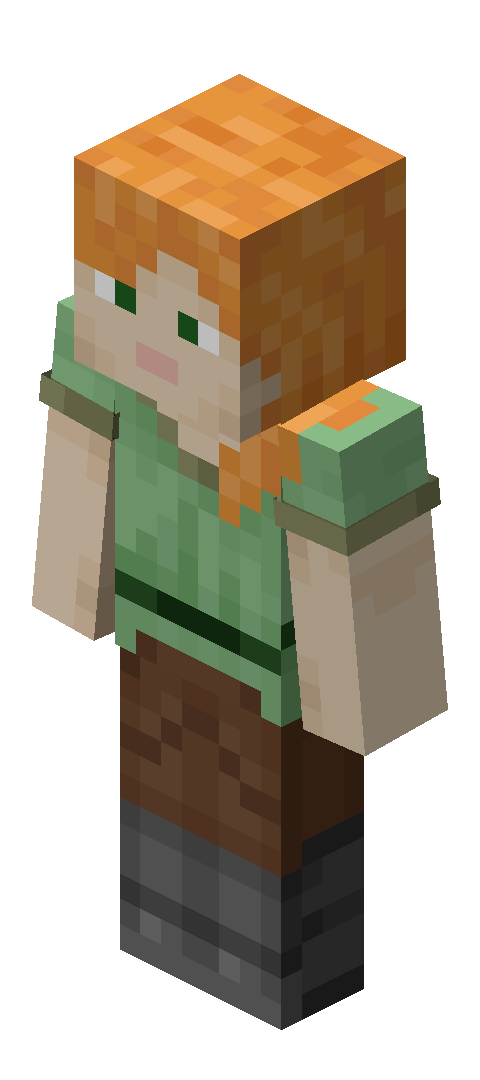
Alex has become one of the most recognizable player models in gaming history. The character appears in official Minecraft merchandise, animated series, and spin-off games including Minecraft Dungeons and Minecraft Legends. Her design has remained largely unchanged since her introduction, becoming iconic within the community. Players customize Alex with skins to represent different themes or their favorite pop culture characters.
Technical Details and Game Mechanics
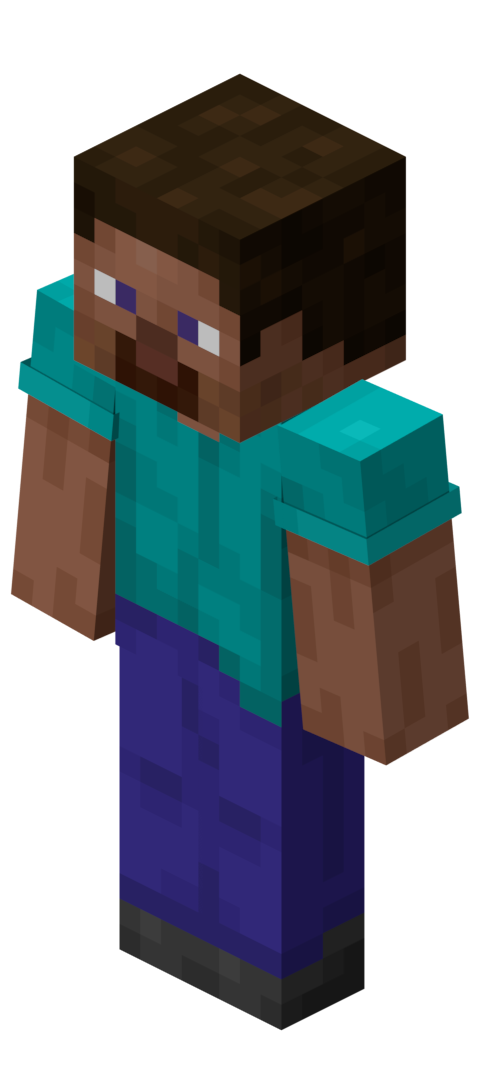
In terms of game mechanics, Alex functions identically to Steve with an 8-pixel wide arm model. Both characters share the same 1.8-block height and movement speed of about 4.3 meters per second. Alex has a default health pool of 20 hit points represented by 10 hearts on the HUD. The character respawns upon death at the world spawn point or the last bed slept in. Understanding these mechanics helps players make strategic decisions about exploration, combat engagement, and inventory management.
Alex in Minecraft Community Culture
Alex has become one of the most recognizable player models in gaming history, appearing in official Minecraft merchandise, animated series, and spin-off games including Minecraft Dungeons and Minecraft Legends. Her orange hair tie and pale green shirt design has remained largely unchanged since her introduction, becoming iconic within the community. Players customize Alex with skins to represent different themes, holidays, or their favorite pop culture characters. Major Minecraft events and conventions frequently feature life-sized Alex statues and cosplay competitions.
Alex Combat and Survival Strategies
When playing as Alex, combat strategy revolves around the same fundamentals as any Minecraft player but with a focus on mobility and terrain advantage. Her slimmer arm model creates a slightly different visual feedback during PvP encounters, which some competitive players prefer for better screen visibility. In survival mode, early-game prioritization should focus on securing a reliable food source and establishing a shelter before the first night. Alex starts with no items, so punching trees for wood and crafting basic tools is the essential first step.
For mid-game progression, Alex players should focus on acquiring full iron armor and establishing a sustainable base with farms for wheat, carrots, and livestock. The Nether portal becomes the next major milestone, requiring obsidian mined with a diamond pickaxe. Alex's identical hitbox to Steve means all speedrunning techniques and advanced movement mechanics including block clutching, water bucket drops, and ender pearl throws work exactly the same way.
Building and Design Philosophy with Alex
Building in Minecraft transcends basic shelter construction, evolving into architectural expression that reflects the player personality. Alex players have contributed some of the most celebrated builds in the community, from sprawling medieval castles to functioning redstone computers. The character gender-neutral design aesthetic encourages creativity without predefined expectations about building style or complexity.
Popular building styles among the Alex community include modern minimalist homes, Japanese-inspired pagodas, underground survival bunkers, and fantasy-themed floating islands. Combining different block textures like quartz, dark oak, prismarine, and concrete creates depth and visual interest. Interior design with item frames, paintings, flower pots, and strategic lighting placement transforms functional rooms into immersive living spaces that feel genuinely inhabited.
Redstone Engineering and Automation for Alex Players
Redstone represents Minecraft most sophisticated system, enabling players to build everything from automatic doors to fully functional computers. For Alex players interested in technical gameplay, understanding redstone fundamentals opens up endless automation possibilities. Basic components like redstone dust, repeaters, comparators, observers, and pistons form the building blocks of more complex circuits. Automatic farms for crops, sugarcane, bamboo, and even iron golems dramatically reduce the time spent on resource gathering. Honey blocks, slime blocks, and sticky pistons enable flying machines that can harvest entire fields or transport items across vast distances without complex rail systems.
Advanced redstone projects include item sorters that organize inventory automatically, combination locks for secure storage rooms, and minecart systems with powered rails for rapid transportation across large distances. The observer block detects block updates, making it essential for automated crop harvesting and tree farming. Redstone torches provide constant power or can be used as inverters in logic circuits. Comparators measure container fullness, enabling auto-smelting systems that shut off when furnaces run empty. Mastering these systems allows Alex to focus more time on exploration and building rather than repetitive resource collection. A well-designed redstone infrastructure transforms survival mode into an efficient automated operation where resources flow continuously. Players can then dedicate their full attention to ambitious architectural projects and exploration rather than repetitive manual collection tasks. This efficiency makes redstone one of the most rewarding skill trees.